
In Honor of HerStory: Interviews with Trailblazing Women
PSLS is built on the foundation of talented attorneys, pro bono volunteers, a mighty staff, and dedicated donors. Together, we devote our time, talent, networks, and funds to help Illinois families navigate and solve their civil legal issues. In honor of Women’s History Month and International Women's Day, we are happy to bring back HerStory. The purpose of HerStory is two fold: First, to outline clear roadmaps for women seeking leadership and mentoring in their lives from other women, and second, to honor the women who blazed trails before us and with whom we continue to stand shoulder to shoulder.
We sat down with a few of the many PSLS supporters to listen to stories of leadership, mentorship, and purpose from these trailblazing women. We express our gratitude for their time to share their professional journeys and the women who stood with them to achieve positive impacts in the fields of law, medicine, and advocacy. PSLS recognizes Women’s History Month and celebrates our women staff, clients, donors, and volunteers.
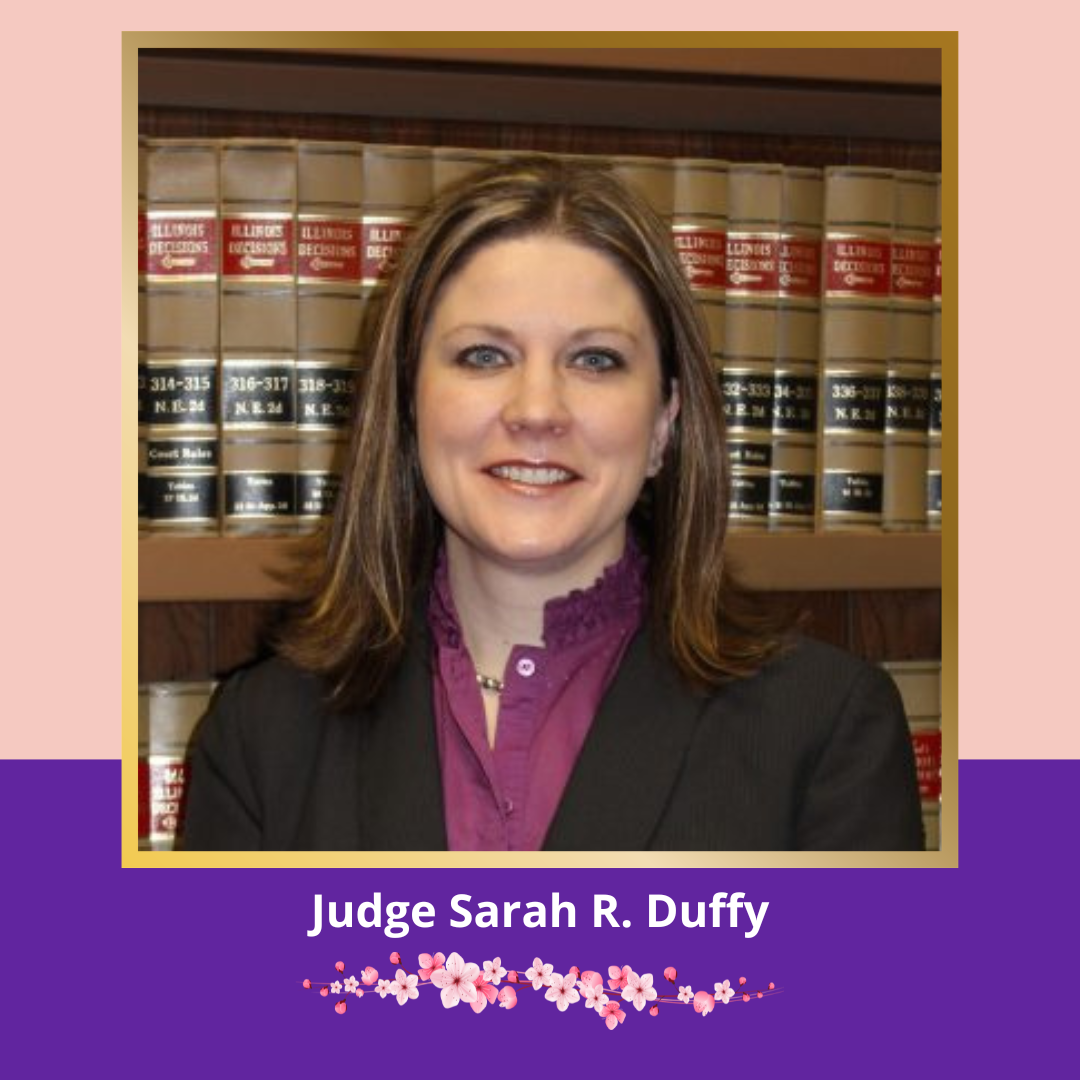
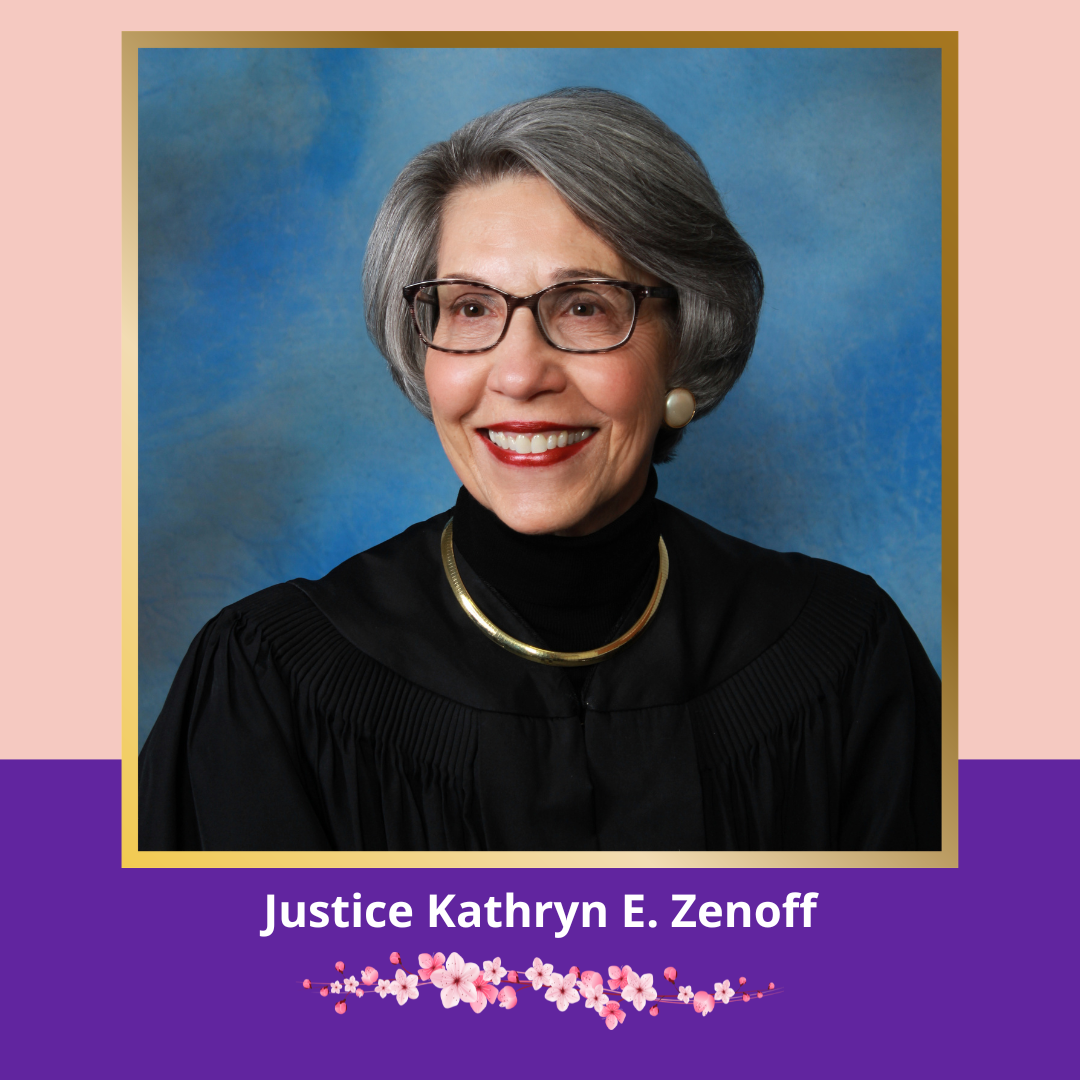
Thank you, Dr. Venoncia Baté-Ambrus, Judge Sarah R. Duffy, Judge Jane Waller (retired), and Justice Kathryn E. Zenoff for this discussion.

.png)
PSLS: Do you have a favorite book that you’ve read recently by a woman author?
Judge Jane Waller (retired) is into “The Correspondent" by Virginia Evans, a novel told in letters and emails about the life of a retired lawyer in her 70’s who must reconcile a painful episode in her past. You discover the disruption in her life... and it's told through letters.
Justice Kathryn E. Zenoff also recently read (actually twice, which is very rare for her), “The Correspondent,” too. It is excellent and happens to be on the New York Times best seller list.
Dr. Venoncia Baté-Ambrus recommends “Survival is a Promise: The Eternal Life of Audre Lorde" by Alexis Pauline Gumbs. Alexis’ approach to Audre’s impact has been celebrated as a revelation.
Judge Sarah R. Duffy is into “A Woman of No Importance: The Untold Story of the American Spy Who Helped Win World War II" by Sonia Purnell, an amazing biography of a woman who orchestrated secret escape missions for many people over French mountains during the war.
PSLS: How did you come to live in Illinois and what county do you call home?
Dr. Venoncia Baté-Ambrus: Both sets of my grandparents emigrated to Chicago during the Great Migration to escape Jim Crow and have opportunities for better lives. I was born and raised on the southside of Chicago, spent my adult life on the north and northwest sides of Chicago before moving to Cook County’s western suburbs. I have lived in Lake County for just over 3½ years, moving to Gurnee for a phenomenal career opportunity with the Healthcare Foundation of Northern Lake County.
Judge Sarah R. Duffy: I am from Pontiac, not far from Bloomington, graduated from Pontiac Township High School and went to the University of Illinois. My undergraduate degree is in industrial engineering and I have a liberal arts and sciences degree with a focus in Spanish. I began work in the IT field.
Judge Jane Waller (retired): My roots are very deep in Lake County. My great-great-grandparents arrived from Ireland in the 1830’s when the Indian wars ended. They settled in what was then known as Little Fort, now known as Waukegan. My family’s history instills me with pride at their pioneer spirit and with a personal need to earn the privileges gained for me at the expense of those displaced. I practiced law in the early years of my career with my father in the remodeled blacksmith shop of my great uncle on Washington Street, right across from the courthouse. I had the advantage of entering the legal field under the mentorship of my dad in a community where I already knew a lot of the players, having grown up with them, or having gone to grade school and high school with their children!
In law school at the University of Illinois, I spent a summer at the Land of Lincoln legal office in Champaign which was a nice first step to practicing law in a small father-daughter law firm where I had to figure out how to handle the kinds of cases that walked in the door. I benefited from the guidance of my dad and from other lawyers in the community who were surprisingly kind to a young woman lawyer. That is not to say that I did not encounter challenges, like the time an older attorney (I think he thought he was being funny) told me that it is impossible for a good woman to be a good lawyer. That’s because a good woman is kind, sweet, and patient but to be a good lawyer you must be forceful and strong willed, and even ruthless. I just laughed.
Justice Kathryn E. Zenoff: I was born and raised in Chicago and its environs. I left for college in California at Stanford, spent a junior year abroad in Paris and Geneva, and then attended law school and practiced law in New York City. I returned to Chicago to practice law in the mid-1970’s and my husband pursued further training in the city in general and pediatric surgery. We moved to Rockford, Winnebago County in 1981, where we both continued our respective careers and raised two children.
PSLS: Could you share your journey to choose your purpose and profession? Were women instrumental in opening doors for you? Is there a story that was particularly pivotal?
Judge Jane Waller (retired): Sister Joseph Mary, my eighth-grade teacher, did not open doors for me, but she did make me think about them. When it was time to elect class officers, Sister called for boys’ names to be placed in nomination for president. And then she called for girls’ names for vice president.
That just didn’t seem right to my 14-year-old self.
Years later, Sister Joseph Mary sent me a nice note congratulating me on being appointed the first woman judge in Lake County. I wrote back to her gently reminding her of the 8th grade election. She said that she remembered and that she too had changed with the times. As a newly elected school board member in her town, she had objected to the practice of only electing a man as chair!
I asked some of my women friends in the legal profession in Lake County the question ‘Who would I say inspired me as a lawyer when I started out?’ They all responded, “There was nobody!” In fact, there were so few women lawyers in Lake County in 1973 I didn’t even need 10 fingers to count them.
I had the advantage that my dad and husband were lawyers in town, so I came in with a bit of credibility just because I was Rich’s daughter and because my husband Mike was an assistant in the Lake County State’s Attorney’s Office. In the early years, Mike and I made lots of good lawyer friends who became our support system. Over time the support system included more and more women lawyers.
That support system included the then Director of the Lake County Bar Association, who at the time was a woman and a friend. There was an opening for an associate judge and she said to me, “You need to apply.” When I showed some hesitation, she picked up the application and brought it to me at my office and stood over me while I filled it out.
My experiences were often very positive in that the judges were respectful. I remember one judge who said: ‘You know, your memo was very, very persuasive.’ That encouragement was really helpful. Other judges weren’t so kind. One told me when I modified my argument, “Well, it’s a woman’s prerogative to change her mind!” And then there was the lawyer who went into the hallway outside the courtroom to “sell tickets” to the spectacle of me and another woman lawyer arguing a motion before the court.
I'm just going to still be me trying to find a solution. I really had to dig down deeper to become someone who was a little bit against my nature, a little bit more willing to stand up for myself. As a judge, I have served in both criminal, civil, traffic, and family court rooms. I ended my career as a judge in the family court where I felt like I was a good fit. During my tenure, I was able to support programs that I think came from my woman’s eyes, like spearheading the creation of a Kid’s Korner, a room for children in the courthouse, like developing a list of mental health evaluators for family cases, like implementing a volunteer mediation program for family cases in the courthouse, like creating a supervised visitation center, like partnering with the College of Lake County to create a parenting class, and like developing a pamphlet explaining the procedure for establishing a guardianship of a minor.
Dr. Venoncia Baté-Ambrus: My journey to purpose and profession was less of a choice and more of an unfolding of vocation. As an Afro-Latina of African American and Louisiana Creole Catholic ancestry, service was a way of life, an expectation, a gift, and a birthright. Other intersectional identities such as growing up on the southside of Chicago, being a young single mother, queer, and living with an invisible disability reinforced a call to service-oriented leadership. The choice to become a community health psychologist and pastoral counselor was influenced by my prior work as a Community Health Worker (CHW) and a lifelong commitment to holistic health and wellbeing, especially for those most impacted by health inequities. These roles also led to me becoming the Executive Director of the Healthcare Foundation of Northern Lake County (HFNLC).
Impactful women in my life include my family and ancestors, women on HFNLC’s executive director search committee: Dr. Melissa Chen, Nadine Johnson, and Laura Ramirez who took a chance on me, and all the women on HFNLC’s board and committees, especially executive committee members: Dr. Frances Baxley, HFNLC Board Chair, Megan Brady, Esq., Vice Chair, and Sunny Sonnenschein, Member at Large. I would also be remiss in not mentioning my HFNLC team members Meredith Polirer and Angela Baran, without whom, I could not do this work. Also, Maria Socorro Pesqueira has been an invaluable philanthropy mentor. In terms of women who opened doors earlier in my career, these include Dr. Brenda Gray and State Representative Camille Lilly.
Justice Kathryn E. Zenoff: I grew up in a family of lawyers: my father, my brother, my uncle who served as Chief Justice of the Nevada Supreme Court, my cousin who became the first woman law professor with tenure at George Washington Law School. But it was my mother (not a college graduate) and my aunt, Esther Rothstein, whose support and influence was most significant. Esther was a legal secretary whose boss encouraged her to go to law school at night. She not only did that while holding a full-time secretarial job during the day but passed the bar and was admitted in 1950. She went on to practice law and also achieved a series of “firsts” for women, including being named in 1977 as the first woman president of the Chicago Bar Association with its 13,000 members and the first woman in the nation to head a city bar association. From the time I was a child, Esther conveyed to me by her words and her deeds, a deep love of the law and spirit of giving back to the community. Her influence and her example were persuasive, and I applied to Columbia University Law School.
Years later in my professional journey, I developed aspirations to devote my career to public service and to become a judge. My mother helped me recognize that while there were great hurdles in achieving that goal as a woman, they were not insurmountable. Indeed, with time and perseverance I learned that she was right. However, I was not the beneficiary of other women “opening doors” for me, as the legal field at the time I entered law school and began to practice, was a man’s world that for the most part excluded women.
My class at Columbia had only 30 women out of a class of 300! In my job search in New York City in 1971, I was told by several firms that they were not prepared to hire a woman! I did find a job, however, in the private sector through persistence and some good luck. Landing a position as a judge in Winnebago County many years later was far more daunting, but finally achieved! I will be forever grateful to my aunt and my mother for their encouragement, support and wisdom as I have found my career in the law and especially on the bench, most rewarding and fulfilling.
Judge Sarah R. Duffy: I was a consultant at Deloitte Consulting in Chicago and a systems analyst at State Farm Insurance. I really enjoyed both of those jobs. I like math, science, and technical work. Ultimately I didn't see that those jobs would allow me to give back or help others long term. I knew attorneys in Pontiac, who I ultimately went to work for, and learned how to practice in a small community. Based upon those conversations, I returned to school. I worked for four years, graduated from the University of Illinois, and returned to Pontiac full-time in a small private practice, doing primarily civil work. I had worked there both summers during law school so I got the opportunity to help individual clients and finally impact people's lives directly. My hope was realized. I worked with Ronnie Fellheimer and Mark Fellheimer, who were tremendous mentors. They had such a good law practice that it was an easy transition back to work. As an adult, I was better able to balance my studies with outside activities and the birth of my nephews. I think I had a better perspective returning to school after having worked. As a woman, I think continuing education and just being open to when you feel that instinctual pull toward purpose is so important.
I remember a woman, two years my senior, whom I developed a friendship with through the Society of Women Engineers. She helped me understand that I could actually graduate with two degrees and still study abroad, so I spent a semester in Spain. She helped me navigate that and understand that opportunity, and then she helped me intern with Deloitte Consulting. She opened doors because she was already working there, and knew the dynamics. I believed I had decent skills, but she really took steps that she didn't have to take.
As far as practicing law, I also met with Judge Bauknecht, who was a private practice attorney in Livingston County at the time. She advised me before I made the decision to enter law school, just to understand what the work was like for a female in that community. She was very gracious in sharing her experience; she had been practicing for a while. My good friends and those friendships have been critical. Developing friendships and knowing that you can rely on each other to ask questions has been supportive. When you are a minority in a profession you notice it.
PSLS: Is there a particular issue that stands out for you when a woman accomplished almost the impossible, was a catalyst for change or was instrumental for women?
Justice Kathryn E. Zenoff: As a woman who began her law career in the 1970s and like others, faced many obstacles to career aspirations and advancement, I viewed Sandra Day O’Connor’s and Ruth Bader Ginsburg’s appointments to the United States Supreme Court in 1981 and 1993, as accomplishing “almost the impossible.” I count Mary Ann McMorrow’s election to the Illinois Supreme Court in 1992 in the same category. These women and their stellar career accomplishments have served as role models for me in my work.
As a judge, I consider it my responsibility to ensure that all litigants who appear in front of me (whether it was formerly when I presided at the trial level, or now in the appellate court), have an adequate opportunity to be heard and that the proceedings be perceived as fair, open, and efficient. I also believe that the privilege of wearing a black robe carries with it the responsibility of acting as a “catalyst for change” to improve our justice system and respond to the needs of our communities. As a trial judge, I could not help but notice that young children were brought into court by their parents or guardians and exposed to often-traumatic court proceedings. I was moved to organize and help establish The Kids Place in 1998, where children could be safely supervised in a separate waiting room in the courthouse.
When Winnebago County was experiencing a significant jail overcrowding problem, we needed all stakeholders to collaborate to find the reason and a solution and I helped convene and lead on behalf of our circuit, a multi-disciplinary task force that identified as one of its causes, the overrepresentation of persons with serious mental illnesses in our jail. We worked to create an alternative to traditional criminal case processing for persons diagnosed with serious mental illnesses and developed a mental health court with wrap-around services, which opened in 2005.
While serving as Chief Judge of Illinois’ 17th Judicial Circuit beginning in 2003, I worked with the Illinois Supreme Court Commission on Professionalism to initiate a local pilot project on civility and professionalism, which became a national model and included an aspirational code of conduct drafted by lawyers and judges in our circuit. When the need to elevate the quality of legal representation for parents appealing juvenile and termination of parental rights decisions became apparent, as co-chair of an ad hoc committee of Illinois judges, I helped design and create a statewide registry soon to launch as a pilot project in an effort to improve the quality of that representation.
My experience has been that as lawyers and judges we are trained and called upon to be problem-solvers. It is up to us then, regardless of gender, to facilitate the changes necessary to improve the administration of justice to meet challenges and serve our community.
Judge Jane Waller (retired): To come back to women supporting each other, when I was in law school at the University of Illinois, women barely accounted for 10% of students. The women found each other, often in the basement where our locker room and 2-stall bathroom was located. The boys, of course, had a bathroom with multiple stalls on the first floor. With just five minutes between classes, there was just not enough time for “us girls” to get to the basement and then back up to the next class.
We created the Women's Law Students Association. We had issues – no women faculty members, poor job placement counseling, and no bathroom on the first floor. Our first demand was a women's restroom on the first floor. Our strategy was that five minutes before the end of every class, all the women in the class walked out. We're not being too disruptive, yet we're making a point. And we were together.
Together we said, ‘We have to get to the bathroom, so we're gonna have to leave early.’ We were polite. The dean called us disruptive but when he asked what could be done to get us to stop, we knew we had won. We got one stall on the first floor, which was the faculty bathroom. A theme here is representation and sticking together for a just cause.
Dr. Venoncia Baté-Ambrus: There are many Louisiana Creole women who defied narrow gender roles and cultural limitations to be catalysts for change in small and large ways. These include Marie Thérèse Coincoin, an enslaved woman who used her skill, compassion, intellect, and grit to break the bonds of slavery to become the matriarch of the powerful Metoyer Creole of Color family; Baroness Micaela Almonester de Pontalba who survived financial and domestic abuse at the hands of her father-in-law, to become a shrewd businesswoman, property owner, and restorer of the French quarter; Venerable Mother Henriette DeLille, a free Creole of Color, who formed one of the first U.S. religious orders for women of color, to minister to sick, dying, and illiterate free and enslaved African-descended peoples, she is among a few members of the African diaspora from the U.S. to be considered for sainthood in the Catholic Church. More contemporary notable Creole women include Iris Duplantier Rideau, first Creole of Color to own a U.S. winery; Mildred Martinez Prevost, mother of Pope Leo XIV; the Knowles women (Tina, Beyoncé, and Solange) who are trailblazers in entertainment and business; and my very own grandmother Hélène Maury Johnson and great aunt Juanita Maury Logan who emigrated north during the Great Migration to lead lives of service and adventure.
Judge Sarah R. Duffy: The 19th Amendment Women’s Right to Vote passed in 1920 and has been instrumental in increasing representation for women.
PSLS: In 2020, women became a majority of general lawyers in the federal government. In 2023, women became a majority of law firm associates. In 2024, the ABA noted women were becoming the majority in the legal profession. When did you recognize more women in leadership positions and how has the legal landscape changed with more women in the profession?
Judge Jane Waller (retired): There were few women to speak up at the beginning of my career but the number of women grew. I give credit to the early efforts of women lawyers to gather and network. The Association of Women Attorneys of Lake County was formed sometime in the 80’s. I was involved in its formation and I still maintain my membership. It was really a very valuable opportunity for us to get to know and respect each other, and to have a friendship. AWALC is still going strong and continues to provide women lawyers with networking and educational opportunities. AWALC has substantially grown through the efforts of the Board and consists of lawyers, judges, and other legal professionals throughout Lake County and neighboring counties.
I also owe much to my sister judges who are life-long friends. I was the only woman on the bench for six years and during that time I had to endure a frequent question from one of my fellow judges, “Your honor, where’s your tie?” Again, I just laughed. And now there are lots of women lawyers (including my daughter-in-law) and many wonderful women judges.
Judge Sarah R. Duffy: Yes, specifically as a judge, we've made some tremendous strides. In the 11th Judicial Circuit there are seven of us. Women represent one third of the judges in the 11th Judicial Circuit. In smaller counties like Livingston County, we did not have as many women attorneys. McLean County definitely had more and so I’ve developed friendships with those individuals. Judge Amy McFarland has been a dear friend of mine even when we had cases against each other in private practice. I think those types of things are vital. I've realized in each stage of my life I've had a group of three to five women who have been and remain tremendous friends and great supports at those stages in my life.
Justice Kathryn E. Zenoff: I noticed more women in leadership positions as our numbers started to grow in our local judiciary. That has been a slow process and indeed taken many years. There were only three women on the bench in the 17th Judicial Circuit in the 1990s, the first being selected by an all male judiciary in 1989. It was not until 1995 that our numbers expanded with my appointment and one other. But it took until 2008 and 2009 for two more women to join our ranks after winning their elections as circuit judges. Today, there are 12 women judges out of 28 jurists in the 17th Judicial Circuit!
While the bench looks different not only in Illinois, but across the nation with more women sitting as judges, I do not think that judges decide cases differently by virtue of being women. In her acceptance speech when she was sworn in as a Justice of the United States Supreme Court in 1993, Justice Ruth Bader Ginsburg quoted Justice Jeanne Coyne of Oklahoma who was asked whether women judges decide cases differently because they are women. She replied that in her experience, “a wise old man and a wise old woman reach the same conclusion.”
Apparent to me is what women judges in higher numbers do add as part of the legal landscape: greater diversity. As Justice Ginsburg also noted in her remarks, women bring to the bench a range of views influenced by differences in culture and life experience that enrich our justice system. It is my hope that it will contribute and foster increased trust in the judiciary.
PSLS: In 2022, women physicians remain a minority but have increased in all 20 specialties that account for 73% of active physicians in the United States. In 2022, women became the majority in the following specialties: Pediatrics at 66%, Obstetrics and Gynecology at 62%, Dermatology at 53% (AAMC.org). How has the medical landscape changed with more women in the profession?
Dr. Venoncia Baté-Ambrus: In the fields in which I’ve been employed, academia, health, human services, and now philanthropy, I have seen many women in leadership positions in metro Chicago. However, in academia and healthcare, I have seen fewer women of color at the highest echelons. I recollect while working for a major northwest suburban healthcare system, I attended a ‘directors and above’ health system meeting and saw very few people of color, let alone women of color, which was very disheartening.
As a recent graduate of Loyola’s Master of Jurisprudence in Health Law and having had a career in healthcare, I sit at the intersection of both professions. With more women in law and healthcare, I hope that advocacy for equal pay, diversification of legal and medical professions, opportunities for career advancement, mentorship and sponsorship, and attention to work-life balance, particularly for caregivers, will become more prevalent.